CONF-SEML 2026

Multimodal Data Acquisition: Applications in Physiological and Behavioral Research


Date

May 20, 2026 (UTC+3)

Organizer

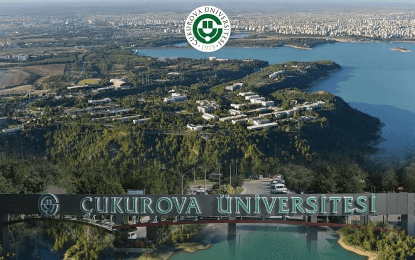
Cukurova University, Biomedical Engineering Dept., Çukurova University


Symposium Chair

Dr. Mustafa İSTANBULLU
Assistant Professor in Çukurova University

Personal Bio

Mustafa İSTANBULLU is an Assistant Professor and vice chair of the undergraduate program in Biomedical Engineering at Çukurova University, where he has been working since 2021. He received his Bachelor's degree in Electrical and Electronics Engineering and later earned a master's degree in Biomedical Engineering from the Istanbul Technical University.

For his master's thesis, he focused on the early diagnosis of osteoporosis using artificial neural networks and support vector machines. He then pursued his PhD at Çukurova University, where his research centered around the design and simulation of a carbon nanotube hybridized field-effect transistor biopotential sensor.

His research interests include microelectronics, microfabrication of semiconductor devices, modeling of electronic devices, analog/digital circuit design, and biomedical instrumentation. He has published articles in international scientific journals and has received an international patent in 2021 for his invention of an ANN-based single calibration impedance measurement system for skin impedance range. He is committed to advancing the field of biomedical engineering and providing his students with an exceptional education.

Committee Members

MSc. Mustafa BORAZAN, Çukurova University, Dept. of Biomedical Engineering, mstfaborazan@gmail.com

Call for Papers

Background

Driver fatigue remains one of the leading contributors to reduced attention, delayed reaction times, and increased accident risk in both professional and everyday driving contexts. Recent advances in physiological monitoring have shown that signals such as electrocardiography (ECG), galvanic skin response (GSR), and facial behavior provide valuable information about cognitive load and alertness fluctuations. Simulated driving environments offer a safe, repeatable, and ethically suitable framework for studying these signals under controlled conditions. Affordable gaming platforms, particularly PlayStation-based driving simulations, now enable researchers to reproduce challenging or monotonous driving scenarios without requiring high-cost simulators. As a result, multimodal physiological data collection during simulated driving has become an emerging tool for human factors research, drowsiness detection studies, and machine-learning-based behavioral modeling.

Goal/Rationale

The goal of this symposium is to address the growing need for standardized, low-cost, and reproducible multimodal data acquisition protocols for fatigue and attention research. Although numerous studies highlight the importance of ECG-derived heart rate variability, sympathetic arousal indicators from GSR, and eye-related behavioral cues from camera recordings, practitioners often lack practical guidance on how to collect high-quality, time-synchronized data in real or simulated driving contexts. This symposium aims to fill that gap by demonstrating a fully accessible workflow that combines PlayStation driving tasks with real-time physiological monitoring. Participants will learn how to prepare sensors, place electrodes, monitor signal quality, synchronize multiple data streams, and annotate driving events. By the end of the session, attendees will understand both the technical and experimental considerations necessary for producing reliable datasets suitable for fatigue detection, cognitive load estimation, and physiologically informed machine learning approaches. The symposium ultimately empowers researchers and students to design and run their own multimodal experiments with minimal equipment and robust methodological structure.

Scope and Information for Participants

This symposium focuses on practical multimodal physiological data acquisition using ECG, GSR, and camera-based facial monitoring during a PlayStation-driven simulated driving task. Participants will explore themes including:

  • Sensor placement and calibration for clean ECG and GSR signals
  • Synchronizing physiological and video data streams
  • Live monitoring and troubleshooting of signal quality
  • Event annotation during driving (e.g., lane changes, speed variations, collisions)
  • Exporting, structuring, and preparing datasets for further analysis

No previous experience with biomedical data collection is required. All equipment will be provided, and participants will work in small groups to collect and review their own datasets. The symposium is suitable for students, early-career researchers, and practitioners interested in fatigue detection, physiological computing, or human–machine interaction studies.

Expected Outcomes

Participants will leave the symposium with:

  • Their own collected multimodal dataset (ECG + GSR + Camera)
  • Practical understanding of setup, calibration, and acquisition
  • Awareness of potential pitfalls in physiological experiments
  • A reproducible protocol they can use in their own theses or research projects
  • Insights into how such data can be modeled for fatigue detection, cognitive load estimation, or behavioral research

This symposium supports the community by promoting hands-on, low-cost, scalable physiological data acquisition techniques, enabling wider participation in fatigue-related human factors research.
Submission

Prospective authors are kindly invited to submit full papers that include title, abstract, introduction, tables, figures, conclusion and references. It is unnecessary to submit an abstract in advance. The deadline for general submission is May 13, 2026.

Each paper should be no less than 4 pages. One regular registration can cover a paper of 6 pages, and additional pages will be charged. Please format your paper well according to the conference template below before submission.

Please prepare your paper in both .docx and .pdf format and submit your full paper by email with both formats attached directly to sympo_adana@confseml.org.

Topics

This symposium welcomes submissions with the following topics

Software Engineering

  • Advanced Topics in Software Engineering
  • Computer-Supported Collaborative Work
  • Computer Graphics and Human-Computer Interaction
  • Decision Support
  • Distributed Computing
  • Knowledge-Based Systems and Formal Methods
  • Languages and Formal Methods
  • Managing Software Projects
  • Modeling Software Architecture
  • Multimedia and Visual Software Engineering
  • Quality Management
  • Search Engines and Information Retrieval
  • Software Engineering Decision Making
  • Software Engineering Practice
  • Software Maintenance and Testing
  • Web Engineering

Meanwhile, submissions aligned with the overall conference scope are also welcomed.

Machine Learning

  • Data Mining in Heterogeneous Networks
  • Deep and Reinforcement Learning
  • Distributed and Decentralized Machine Learning Algorithms
  • Human-robot Interface and Interaction
  • Network Slicing Optimization
  • User Behavior Prediction
  • Machine Learning in Knowledge-Intensive Systems
  • Machine Learning Methods and Analysis
  • Mechanism Design and Applications
  • Mobile Sensor Networks
  • Modeling and Identification
  • Multi-agent Systems
  • Natural Language Processing
  • Pattern Recognition and Classification for Networks
  • Robotic Automation and Control

Computer Applications

  • AI Architecture and Practice
  • AI Model and Algorithms
  • Artificial Intelligence in Modeling and Simulation
  • Artificial Intelligence in Scheduling and Optimization
  • Cloud Computing Architecture
  • Computer Vision and Object Recognition
  • Concurrent and Parallel Processing
  • Coordination in Robotics
  • Data Visualization and Modern Technologies
  • Distributed Intelligent Processing
  • Intelligence and Language
  • Intelligent Wireless Communications
  • Intelligent Wireless Sensor Networks
  • Internet of Things
  • Software Frameworks and Simulations

Submission & Payment

Type Regular Submission
Final Submission May 13, 2026
Review Process 2 weeks
Revise & Acceptance 2 weeks
Registration & Payment 2 weeks

Fees

Items Amount (VAT Included)
Registration and Publishing Fee (6 pages included) $500
Additional Page $40/extra page

Publication

Accepted papers of this symposium will be published in Applied and Computational Engineering (Print ISSN: 2755-2721), and will be submitted to Conference Proceedings Citation Index (CPCI), Crossref, Portico, Inspec, Google Scholar, CNKI, and other databases for indexing. The situation may be affected by factors among databases like processing time, workflow, policy, etc.

This symposium is organized by CONF-SEML 2026 and will independently proceed the submission and publication process.

Please note that the publication policy may vary between different publishers. For details regarding the publication process, kindly refer to the policies of the respective publisher.

Venue

Balcalı, Çukurova Üniversitesi Rektörlüğü, 01330 Sarıçam/Adana, Turkey

VISA

www.mfa.gov.tr

General Visa Information

  • Visitors who are not exempt from entry visa must obtain their visas or schedule an appointment with the Turkish Consular offices via Pre-Application System for Turkish Sticker Visa (www.visa.gov.tr). The applicants who meet the requirements will be directed by the Pre-Application System for Turkish Sticker Visa to the e-Visa system (www.evisa.gov.tr). In those countries where Türkiye does not have a consular representation, applicants can also use online scheduling for appointments with the nearest accredited consular office of Türkiye.
  • In order to avoid inconveniences that may be caused by delays in processing, it is recommended to apply for visas at least one month in advance before the planned travel.
  • The visas submitted to foreigners do not guarantee absolute rights of entry to Türkiye.
  • Visa fees are not refundable in cases where applications are rejected.
  • All applicants are required to have a medical insurance that will be valid during their stay in Türkiye.
  • The length of stay provided by visa or visa exemption cannot exceed 90 days within each 180 days. The regulation of 90 days of stay within the last 180 days is binding for all foreigners that will travel to Türkiye.
  • It is not possible for foreigners holding two passports to stay in Türkiye for 90 days each with their two different passports within the last 180 days.
  • In all types of visa applications, Turkish consular offices may issue visas with a maximum duration of stay of 90 days. Foreigners who wish to stay longer than 90 days in Türkiye should apply for a "Short Term Residence Permit" at the Provincial Directorate of Migration Administration in order to extend their residence.
  • The residence permit of foreigners will be cancelled if they stay outside Türkiye for longer than 120 days in total during the last year.
  • For United Nations (UN) Travel Document (Laissez-Passer) holders who have blue UN travel documents, visa exemption with 90 days length of stay within the preceding 180 days may apply during their official visit to Türkiye if they can certify their official assignment. Red UN Travel Document holders shall be exempt from entry visa and may stay in Türkiye 90 days within the preceding 180 days regardless of their purpose of visit. General visa provisions shall apply for blue UN travel document holders subject to regulations specified according to their country of origin.
  • Visa applications for travels except for touristic or trade purposes (work or study etc.) need to obtain visa through Turkish representations abroad.
  • Regardless of the visa regime applied towards the citizens of a country, the travel document holders of that country need to obtain visa from Turkish missions beforehand.
  • Any applicant under the age of 18 must submit official written approvals from both parents. For applicants who certify that their parents are officially divorced and prove the parent holding their custody, as well as for those with one parent deceased, visas may be issued in accordance with their purpose of visit.
  • The authorization of processing the residence permit applications submitted by the following persons who enter Türkiye availing visa-free regime and without requirement of obtainment of Student Visas lies with Local Immigration Offices (Provincial Directorates of Migration): foreigners who arrive in Türkiye upon invitations by universities under Turkish Higher Education Board to study at the associate, undergraduate, graduate, post-graduate, Ph.D. levels pursuant to international student exchange programs, cultural programs as well as under EU Education and Youth Programs.
  • For foreigners wishing to enter Türkiye via naval ports with touristic purposes, visa-free entry permits may be issued by the local governorates. These permits shall have a maximum 72 hours duration of stay and will be only valid for sightseeing purposes in the vicinity of naval ports where they entered the country. This practice, as it intends to facilitate entry for those visitors subject to visa, does not entitle visitors to visa. Passports of these visitors are not retained by the border authorities; however, visitors are given a "Harbor City Entry Permit" which is required to be returned to the authorities upon their exits.
  • Any piece of data submitted here may be processed and stored in a database accessible to the relevant Turkish authorities in accordance with their respective mandates.

Tourist Visa

  • If an invitation letter is submitted for a Touristic Visa application, it must include the inviting person's TR Identity Number, clear identity, the list of invitees, permanent address, contact number, length and purpose of stay, and the affinity with the applicant must be stated in the letter.
  • If the inviting side is an organization or a company, the tax registration certificate of the organization will be required.
  • In the invitation letter it is also required for the inviting person/authority to pledge for covering victuals and accommodation expenses and to take responsibility. The applicant is required to have sufficient and/or regular remunerations.