CONF-SEML 2026

Importance of Machine Learning Methods and Analysis in Engineering


Date

March 20th, 2026 (UTC+5)

Organizer

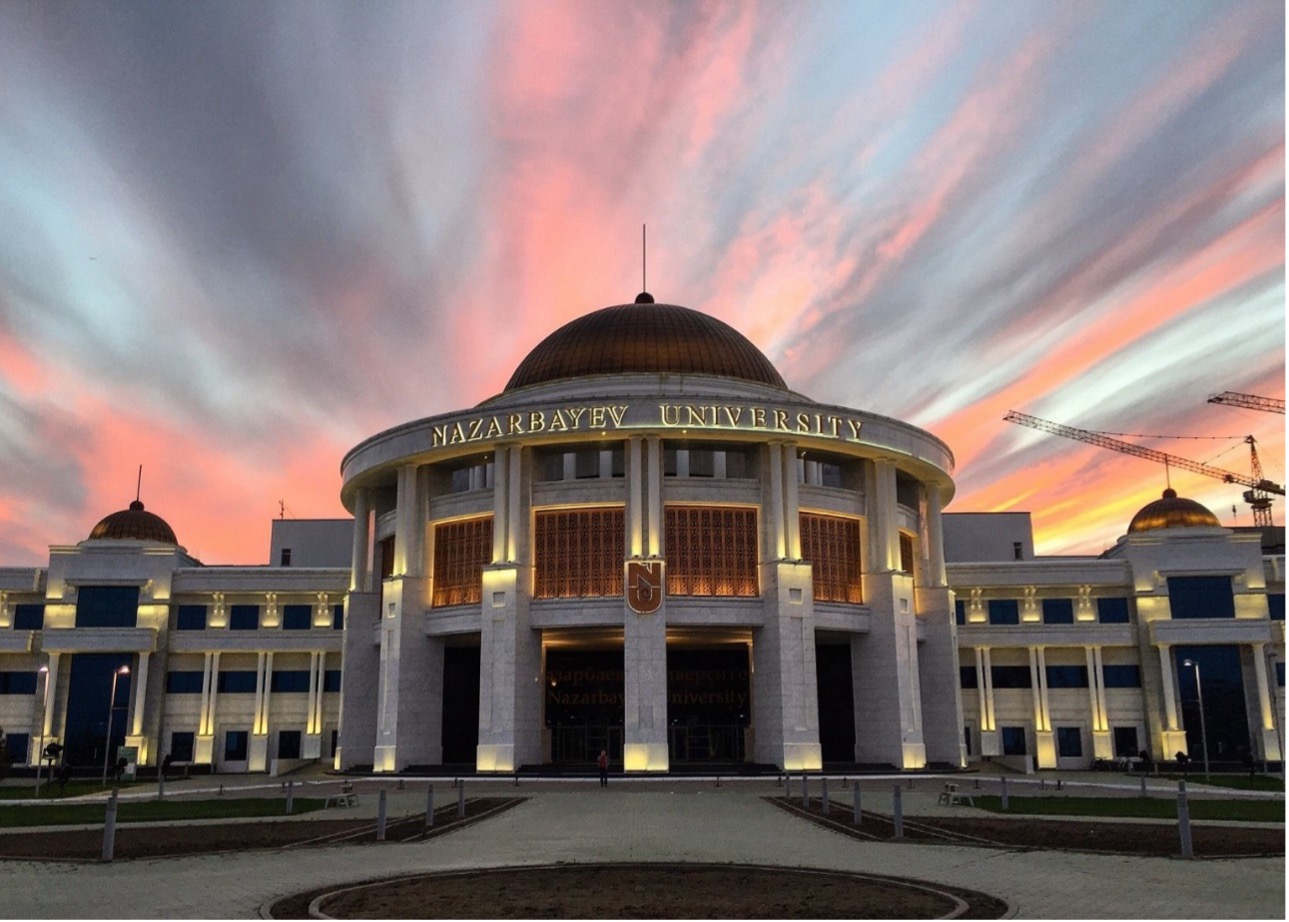
School of Mining and Geosciences, Nazarbayev University


Symposium Chair

Dr. Mian Umer Shafiq
Assistant Professor in Nazarbayev University

Personal Bio

Engr. Ts. Dr. Mian Umer Shafiq is a PhD holder in Petroleum Engineering from Curtin University, Australia, and currently works as an Assistant Professor in the School of Mining and Geosciences at Nazarbayev University, Kazakhstan. He earned the title of International Professional Engineer from the Pakistan Engineering Council (PEC) and the Professional Technologist Title from the Malaysian Board of Technologists (MBOT). He also worked previously at UCSI University Malaysia as an Assistant Professor, where he served as research and MS program coordinator of the department. He also worked at NFCIET Pakistan as an Assistant Professor. During his tenure at NFC IET Multan, he was assigned the role of Head of Department. He is an active researcher and has published more than 30 research publications, including various journal papers and book chapters. His research interests include production optimization, Machine Learning, Carbon Capture and Storage, Hydrogen Storage, Stimulation, and Enhanced Oil Recovery. He also won a few internal funding awards and is currently supervising 2 PhD students and 1 MS student.

Committee Members

Mr. Nurassyl Zhumabayev, Nazarbayev University, Kazakhstan, nurassyl.zhumabayev@nu.edu.kz

Ms. Ainur Utetleuova, Nazarbayev University, Kazakhstan, ainur.utetleuova@nu.edu.kz

Call for Papers

Background

The petroleum industry is undergoing a technological transformation, driven by the need for increased efficiency, enhanced safety, and improved sustainability in exploration, production, and reservoir management. Machine Learning (ML), a subset of Artificial Intelligence (AI), has emerged as a powerful tool to address complex, data-intensive challenges in engineering. From predictive maintenance of equipment and real-time engineering design optimization to reservoir management and optimized hydrocarbon recovery, ML techniques are enabling engineers to make data-driven decisions with unprecedented accuracy and speed.

The integration of ML into engineering workflows offers opportunities to reduce operational costs, improve production, and minimize environmental risks. Despite its growing adoption, there is still a knowledge gap among professionals and researchers regarding the practical implementation of ML techniques and tools specific to petroleum engineering applications.

Goal/Rationale

The petroleum industry faces increasing challenges due to the complexity of extracting hydrocarbons from mature and unconventional reservoirs, the volatility of energy markets, and the growing emphasis on environmental sustainability. Traditional methods of operation, which often rely on manual processes and reactive decision-making, are no longer sufficient to meet the demands of modern petroleum engineering. The primary objectives of this workshop are:

  • To introduce the fundamentals of machine learning and its relevance to the engineering industry.
  • To showcase real-world applications of ML in various domains of petroleum engineering.
  • To provide hands-on experience with ML tools and workflows using real or synthetic datasets.
  • To encourage interdisciplinary collaboration between data scientists and engineers.
  • To discuss challenges, limitations, and ethical considerations in the use of AI/ML in the engineering sector.

Scope and Information for Participants

This workshop will explore the integration of machine learning (ML) techniques in various domains of engineering, especially Petroleum Engineering. Participants are invited to contribute research, case studies, or practical applications addressing the use of ML in drilling optimization, reservoir characterization, production forecasting, and enhanced oil recovery. The scope also includes data preprocessing, feature selection, model validation, and the use of real-time analytics for decision-making. Contributions may highlight supervised and unsupervised learning methods, deep learning architectures, and hybrid modeling approaches. We encourage submissions that demonstrate innovation in applying ML to field data, interpretability of models, and integration with existing engineering workflows. This workshop aims to foster interdisciplinary collaboration and bridge the gap between data science and engineering practice.
Submission

Prospective authors are kindly invited to submit full papers that include title, abstract, introduction, tables, figures, conclusion and references. It is unnecessary to submit an abstract in advance. The deadline for general submission is March 13, 2026.

Each paper should be no less than 4 pages. One regular registration can cover a paper of 6 pages, and additional pages will be charged. Please format your paper well according to the conference template below before submission.

Please prepare your paper in both .docx and .pdf format and submit your full paper by email with both formats attached directly to sympo_Astana@confseml.org.

Topics

This symposium welcomes submissions with the following topics

Machine Learning

  • Data Mining in Heterogeneous Networks
  • Deep and Reinforcement Learning
  • Distributed and Decentralized Machine Learning Algorithms
  • Human-robot Interface and Interaction
  • Network Slicing Optimization
  • User Behavior Prediction
  • Machine Learning in Knowledge-Intensive Systems
  • Machine Learning Methods and Analysis
  • Mechanism Design and Applications
  • Mobile Sensor Networks
  • Modeling and Identification
  • Multi-agent Systems
  • Natural Language Processing
  • Pattern Recognition and Classification for Networks
  • Robotic Automation and Control

Meanwhile, submissions aligned with the overall conference scope are also welcomed.

Computer Applications

  • AI Architecture and Practice
  • AI Model and Algorithms
  • Artificial Intelligence in Modeling and Simulation
  • Artificial Intelligence in Scheduling and Optimization
  • Cloud Computing Architecture
  • Computer Vision and Object Recognition
  • Concurrent and Parallel Processing
  • Coordination in Robotics
  • Data Visualization and Modern Technologies
  • Distributed Intelligent Processing
  • Intelligence and Language
  • Intelligent Wireless Communications
  • Intelligent Wireless Sensor Networks
  • Internet of Things
  • Software Frameworks and Simulations

Software Engineering

  • Advanced Topics in Software Engineering
  • Computer-Supported Collaborative Work
  • Computer Graphics and Human-Computer Interaction
  • Decision Support
  • Distributed Computing
  • Knowledge-Based Systems and Formal Methods
  • Languages and Formal Methods
  • Managing Software Projects
  • Modeling Software Architecture
  • Multimedia and Visual Software Engineering
  • Quality Management
  • Search Engines and Information Retrieval
  • Software Engineering Decision Making
  • Software Engineering Practice
  • Software Maintenance and Testing
  • Web Engineering

Submission & Payment

Type Regular Submission
Final Submission March 13, 2026
Review Process 2 weeks
Revise & Acceptance 2 weeks
Registration & Payment 2 weeks

Fees

Items Amount (VAT Included)
Registration and Publishing Fee (6 pages included) $500
Additional Page $40/extra page

Publication

Accepted papers of this symposium will be published in Applied and Computational Engineering (Print ISSN: 2755-2721), and will be submitted to Conference Proceedings Citation Index (CPCI), Crossref, Portico, Inspec, Google Scholar, CNKI, and other databases for indexing. The situation may be affected by factors among databases like processing time, workflow, policy, etc.

This symposium is organized by CONF-SEML 2026 and will independently proceed the submission and publication process.

Please note that the publication policy may vary between different publishers. For details regarding the publication process, kindly refer to the policies of the respective publisher.

Venue

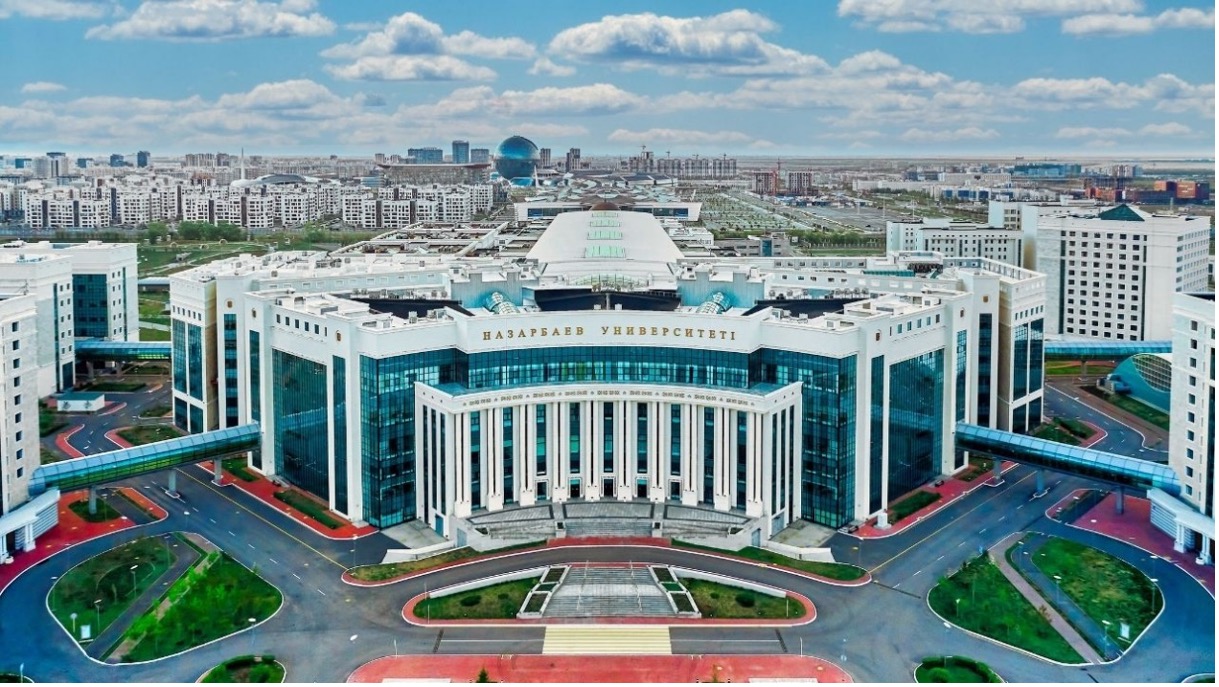
Qabanbay Batyr Ave 53, Astana 010000, Kazakhstan

VISA


Visa-migration portal of the Republic of Kazakhstan

In order to ensure the information is correct and up to date, there may be changes which we are not aware of. And different countries have different rules for the visa application. It is always a good idea to check the latest regulations in your country. This page just gives some general information of the visa application.

Who provides the service

Foreign Offices of the Republic of Kazakhstan / Territorial divisions of the Republic of Kazakhstan

Who can receive the service?

Foreign citizen

Period of service provision

5 (five) working days
If the coordinating body does not provide a response within the specified period, the state service shall be provided within 1 working day after receipt of the approval.

Service cost

State fee for tourist visa - $60, for business - $80, for treatment - $80

The following types of visas are available for E-Visa:

  • single-entry business visa;
  • single-entry tourist visa;
  • single-entry treatment visa;
  • single-entry investor visa.

Single entry visas entitle the visa recipient to a single entry into the Republic of Kazakhstan, travel through its territory, stay in it and leave the Republic of Kazakhstan for a time, for the purposes and under the conditions established by the visa.

Visas are issued after payment of consular fees and state duties in accordance with the legislation of the Republic of Kazakhstan.

Paid amounts of consular fees are non-refundable.

E-visa can be issued only if there is a valid invitation from the Kazakh side. To apply for an e-visa, you need an invitation number received from the inviting Kazakh side. The issued electronic visa must be printed out for presentation at the state border crossing and on the territory of the Republic of Kazakhstan. Electronic visa gives the right to enter / exit the Republic of Kazakhstan only through the international airports of Nur-Sultan and Almaty.

E-visas are not issued to foreigners with whom children travel together.

To get the service online:

[1]. Log in to the portal;

[2]. Fill in personal data: Invitation number; Passport data.

[3]. Go to the online payment of the consular fee;

[4]. The result of this service is stored in your personal account, in the section Visas

[5]. An electronic visa must be printed and presented when passing through passport control.

Attend in person

If you want to attend the symposium on-site, please email the Conference Committee: sympo_astana@confseml.org.

NOTICE

Should your application be denied, the organizing committee cannot change the decision of visa officer, nor will CONF-SEML engage in discussion or correspondence with the visa application center on behalf of the applicant. The registration fee CANNOT be refunded when the VISA application of individual being denied.